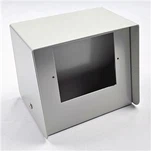
Sheet metal materials
Common sheet metal material types:
- Cold rolled steel sheet (SPCC): low cost, surface needs electroplating or painting, used for general structural parts.
- Stainless steel (SUS304/316): strong corrosion resistance, suitable for food and medical equipment.
- Aluminum (5052/6061): lightweight, good conductivity, used for electronic housing or aerospace.
- Galvanized sheet (SECC/SGCC): galvanized surface for rust prevention, mostly used in chassis and cabinets.
- Copper/brass: excellent conductivity, used for electrical components.
Properties of the above materials:
- Ductility: determines whether the material is suitable for stretching and bending.
- Hardness: affects the difficulty of processing (such as stainless steel requires higher power laser cutting).
- Surface treatment compatibility: such as powder spraying and electroplating requirements for materials.
Sheet Metal Processing Technology
Cutting
Laser cutting: high precision (±0.1mm), suitable for complex shapes.
NCT: suitable for mass production, but the mold cost is high.
Shearing/plasma cutting: economical but low precision, suitable for rough processing of thick plates.
Forming
Bending: the bending coefficient (K factor) needs to be calculated to avoid springback error.
Pressing: stretching, embossing and other effects are achieved through the mold.
Rolling: used for pipes or cylindrical parts.
Connection process
Welding (TIG/MIG): TIG welding is commonly used for stainless steel and aluminum.
Riveting/rivets: no thermal deformation, suitable for thin plate connection.
Bonding: lightweight with structural adhesive.
Surface treatment
Spraying (powder/liquid): powder spraying is more environmentally friendly and has strong adhesion.
Electroplating (galvanizing, nickel plating): improve corrosion resistance.
Anodizing: hardening treatment of aluminum surface.
Brushed/Polished: Improve the appearance texture.
Sheet Metal products