


Bucket
eXCAVATOR BUCKET
BeRay is primarily involved in manufacturing mechanical attachments for excavator buckets, mini excavator buckets, wheel loader buckets, skid steer loader buckets, and backhoe loader buckets, ranging in weight from 0.9 tons to 400 tons. BeRay insists on using the highest quality and cost-effective materials. Its exclusive manufacturing process can customize any accessories you need, provided that you have drawings and specifications.
BeRay manufactures a wide range of buckets including GENERAL PURPOSE, ROCK, ROCK HARD HEAVY, MUD, TILT MUD, and SKELETON buckets, along with HYDRAULIC and MANUAL ROCK GRABS, RIPPER TYNES, HALF HITCHES, COMPACTION WHEELS, FORKLIFTS, and EXCAVATOR QUICK COUPLERS, tailored to various machine types and serving as aftermarket replacements for CAT, HITACHI, JCB, KOBELCO, KOMATSU, YANMAR, and KUBOTA.
PRODUCE PROCEE

dESIGN
Design as the customers' working condition.

FABRICATION
Cutting, bending, rolling, welding, painting.

QUALITY CHECKING
Checking the welding and fitment size.

sHIPMENT
Packing and delivery.
BeRay provide PROFESSIONAL SERVICE pre-sale, installation and after-sale.
What Is Excavator Bucket?
Excavator Bucket is a large metal container attached to the arm of an excavator that is used for digging and scooping dirt, rocks, and other materials for excavation and construction projects. It comes in various sizes and shapes depending on the kind of work it is designed for. Some excavator buckets are designed for fine grading or light digging, while others are designed for heavy-duty digging or breaking up hard materials. The bucket can be modified with different attachments to perform a variety of tasks, such as grading, trenching, and loading.
-
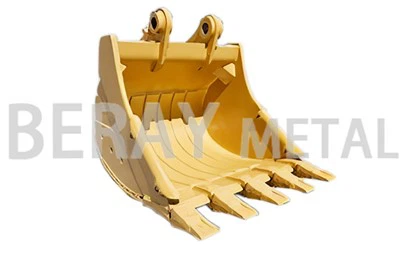
 380C 260-1089 for Caterpillar Extra Heavy Loading 5.6cm3 ...Part No:260-1096,260-1083,260-1089,260-1097,266-6515,260-1092,260-1071,260-1093. 260-1089Add to Inquiry
 -

-
-
 Mining Shovels Bucket 6020B For CAT Capacity 12m3Bucket load: 20-25tons . Machine Model: CAT 6020, 6020B, 6030 . GET system: CAT C85Add to Inquiry
 -
 High-Quality SH200 Sumitomo Standard Rock BucketMachine Model: SH200Product No. SH200 Bucket for Sumitomo ExcavatorTon Class: 20 TonBucket Type:Add to Inquiry
 -
 SH300 GP Bucket For Sumitomo ExcavatorMachine Model: SH300Product No. SH300 Bucket for Sumitomo ExcavatorTon Class: 30 TonBucket Type: GPAdd to Inquiry
 -
 SK330 Digging Rock Bucket For Kobelco ExcavatorMachine Model: SK330Product No. SK330 Bucket for Kobelco ExcavatorTon Class: 35 TonBucket Type:Add to Inquiry
 -
 SK385 Heavy Duty Bucket For Kobelco ExcavatorMachine Model: SK330Product No. SK330 Bucket for Kobelco ExcavatorTon Class: 35 TonBucket Type:Add to Inquiry
 -
 SK460 Heavy Rock Bucket For Kobelco ExcavatorMachine Model: SK460Product No. SK460 Bucket for Kobelco ExcavatorTon Class: 40 TonBucket Type:Add to Inquiry
 -
 SK500 Rock Digging Bucket For Kobelco ExcavatorMachine Model: SK500Product No. SK500 Bucket for Kobelco ExcavatorTon Class: 50 TonBucket Type:Add to Inquiry
 -
 SK495 Digging Rock Bucket For Kobelco ExcavatorMachine Model: SK495Product No. SK495 Bucket for Kobelco ExcavatorTon Class: 50 TonBucket Type:Add to Inquiry
 -
 R335 Digging Hyundai Bucket High QualityMachine Model: R335Product No. R335 Bucket for Hyundai ExcavatorTon Class: 30 TonBucket Type: RockAdd to Inquiry
-
 Coffee Stainless Knock Box Custom Black
 -
 Coffee Milk Jug Rinsering Pitcher Rinsers
 -
 Wheel Chock And Holder Suitable Truck
 -
 Heavy Truck Jack Stand Compact Heavy Duty
 -
 Adjustable Wheel Locker Heavy Duty Truck
 -
 Distribution Box Steel Metal Box Chassis Cabinet
 -
 Drip Trays Customize Drip Pans Spill Tray
 -
 Metal Aluminum Base Plate And U Head Scaffolding
 -
 Fire Extinguisher Cabinets/Box Customize Sheet Metal
 -
 Stainless Steel Guardrail Brackets Handrail Bracket
- ATTN: Fiona (Sales Manager)
- Email: sales01@beray-metal.com
- Add: 9-89-11, Building 017, No.128 Huizhan Road, Yinzhou District, Ningbo City, Zhejiang Province
Advantages of Excavator Bucket
Increased Productivity
Beray's excavator parts are made of high-strength materials, ensuring optimal work efficiency and durability when mining rocks.
Easy Operation
The excavator bucket is easy to operate and easy to use. We use humanized design and it is also very convenient to install.
Durability
The excavator bucket is strong and durable. We use high molecular density materials, and the quality of the bucket itself can adapt to most difficult mining environments.
Versatility
Excavator buckets vary in size and shape to accommodate different tasks. Certain buckets are tailored for trenching, while others excel in digging holes and foundational work.
Reduced Environmental Impact
Excavator buckets are environmentally friendly, with some models incorporating features that minimize their environmental impact. For instance, the CAT 350 model is known for its low emissions and fuel consumption.
Increased Safety
Excavator buckets are designed with the driver's safety in mind. They are equipped with features such as stabilizers and safety switches to keep people safe in the first place in case of an emergency.
Types of Excavator Bucket


Digging Bucket
The digging bucket is likely what one envisions when they're thinking of a traditional bucket on an excavator. The digging bucket has multiple uses, but its main use is right in the name — digging! A digging bucket typically features teeth on the end of the bucket that allow it to break through and dig up hard surfaces for general construction and landscaping purposes. While the digging bucket is the most popular, it's not always the best choice.
Best for:Digging up hard surfaces and moving material in general construction and landscaping projects.
Rock Bucket
A rock bucket is ideal for compact and hard surfaces that you need to break through. A rock bucket is reinforced for extra strength that can withstand a lot of pressure, but the most notable feature of a rock bucket is its sharp teeth that can better penetrate stubborn surfaces when a digging bucket just won't do. A rock bucket is an extremely versatile option, as you can use it for various projects where digging and moving materials are necessary. Asphalt removal and stone extraction are two projects where you'd often see a rock bucket.
Best for:Penetrating and breaking up solid surfaces like asphalt, stone and large sheets of rock.
Utility Bucket
Utility buckets prove to be extremely useful when you're excavating near pipes and cables. Cable strikes are inconvenient and can harm to the excavation crew. With the utility bucket, construction crews can continue their digging or trenching without running the risk of striking a utility line. Instead of teeth at the edge of the bucket, a utility bucket uses a rounded edge that is double-enforced for structural integrity.
Best for:Digging near utility lines and pipes without running the risk of striking a cable.
Grading Bucket
A grading bucket is another common excavator bucket, but instead of using it for digging, a contractor uses it for smoothing and leveling a surface. Grading buckets, also known as finishing or trench cleaning buckets, are short, shallow and wide. Grading buckets are not designed to move heavy materials but instead create a flat profile at the end of a project. The excavator operator achieves a smooth surface by dragging the long, flat edge of the bucket along the ground to distribute a fine aggregate.
Best for:Leveling and profiling the ground to leave a smooth finish, also known as grading. Works best with softer materials such as fine dirt and sand.
Tilt Ditch Cleaning Bucket
A tilt ditch cleaning bucket is true to its name. It's a cleaning bucket with a similar build to a grading bucket. What makes this bucket special is that it can tilt 45 degrees left or right, allowing the operator to work at an angle. A contractor typically uses a tilt ditch cleaning bucket when working on a trench or a sloping surface. Many consider this bucket to be a “finishing” bucket, so it's typical to use it at the end of the project to tidy things up and leave a smooth finish. The tilt ditch cleaning bucket is similar to the grading bucket because it uses a flat and wide edge to distribute and smooth out soil, sand or fine dirt.
Best for:Smoothing, cleaning and finishing more complex projects set on a slope or an otherwise uneven surface.
V Bucket
There's nothing quite like the V bucket. Its unique shape creates clean v-shaped trenches with a swoop of the excavator's arm. Depending on the material you're trenching, a V bucket could come with or without teeth, but a more compact surface would require teeth to assist with the digging portion of the task. A V bucket is useful for various projects, but they are most useful for creating narrow trenches where someone could lay cables and pipes. V-shaped trenches are also useful for creating a ditch that offers drainage. While the bucket does not look overly large, it is a complex attachment that needs a decent amount of power to drive it. For this reason, V buckets are best paired with a larger excavator.
Best for:Digging and cleaning v-shaped trenches where you will lay pipes and cable.
Frost Bucket
You might think of a frost bucket as the rock bucket's more advanced brother. A frost bucket is equipped with additional teeth on the backside of the bucket. Frost buckets rip through hard surfaces easier than any other bucket due to their specific design that can dig through the frozen ground. Depending on the project's climate, a rock bucket might not be the right solution for excavating. In mountainous and extremely cold environments, it's common for the ground to freeze during the winter, making an already hard surface even harder. Thanks to its extra teeth, a frost bucket can rip through the ice, rocks, compact dirt and virtually any sediment.
Best for:Breaking up extremely compact and hard surfaces — especially those where rock buckets can't quite dig through.
Micro Trenching Bucket
A micro trenching bucket is a narrow, almost claw-like bucket that creates trenches that are only a few inches wide yet considerably deep. Since the bucket digs much smaller trenches, it can save contractors a significant amount of time in digging and backfilling. A micro trenching bucket may also be known as a fiber-optic bucket because its creation was intended for creating small trenches that fiber-optic cables could run through. While the micro trenching bucket is still in use for this purpose today, it's also useful for laying pipes and irrigation systems.
Best for:Digging narrow trenches that are only a few inches wide that are useful for laying cables, pipes and irrigation systems.
Skeleton Bucket
At first glance, a skeleton bucket looks a lot like a digging bucket, but there's one key difference that sets the two apart. The back of a skeleton bucket has large slots or a grid that allows fine materials to pass through, therefore sifting out the larger materials. A skeleton bucket is useful for doing two jobs at once. It can dig up large amounts of material while separating large pieces of stone, trash, concrete and other materials. The benefit of separating the finer materials from the larger ones is reusing the sediment to backfill trenches and ditches or recycle it for another project.
Best for:Separating aggregates like large rocks or other materials from dirt. Often used in projects where you will separate dirt, soil and sand and reuse them in other aspects of the project.
Rake Riddle Bucket
Rake riddle buckets are similar to a skeleton bucket since the two buckets feature slats for debris to fall through. However, rake riddle buckets serve a slightly different purpose. The word “rake” is essential to the bucket's name because that's exactly what it does. While other buckets are deeper with a larger carrying capacity, this bucket focuses more on using its long teeth to effectively rake through dirt and soil. Rake riddles are useful for the sole purpose of separating aggregate and trash from a load. You will most commonly use them for loosening and digging up tree roots, shrubs and grass while saving the soil for later use.
Best for:Digging out tree roots and shrubbery while allowing soil, dirt and other fine aggregates to pass through.
Clean-up Bucket
Clean-up buckets are another type of finishing bucket that is equipped with a straight edge and long width for grading and smoothing out the surface. However, clean-up buckets have a larger carrying capacity than other finishing buckets, in fact, it's almost similar to that of a digging bucket. While a clean-up bucket is definitely not meant for digging, its larger capacity proves helpful when a worksite needs cleaning. The clean-up bucket can carry and remove large loads of loose materials, leaving a worksite better than it was found. A clean-up bucket is essentially an all-in-one finishing bucket that can level a surface and haul away large loads. If you're in need of a grading bucket, this bucket can check off two needs at once.
Best for:Cleaning up a job site and shoveling loose materials. You can also use it for grading and smoothing materials for a finished appearance.
Material of Excavator Bucket
Excavator Bucket Sides
The bucket sides and cutting edge are usually made of AR steel plate. The most popular grades are AR360 and AR400. AR 360 is a medium carbon, low alloy steel that is heat treated to provide excellent abrasion resistance and high impact strength. AR 400 has also been heat treated but it provides abrasion resistance and superior yield strength. Both of these steels have been carefully quenched and tempered to product qualities that are key to a good bucket. Note that the numbers after AR are the Brinell hardness of the steel.
Excavator Bucket Shell
The bucket shell is often made of ASTM A572 Grade 50 (sometimes written A-572-50), a high strength, low alloy steel. This steel is alloyed with columbium and vanadium. Vanadium helps with maintaining the toughness of the steel. This grade of steel is desirable as a bucket shell material because it provides excellent strength without weighing quite as much as comparable steels such as A36. It is also readily welded and formed.
Excavator Bucket Teeth
In order to discuss what bucket teeth are made of, it is important to understand that there are two ways of manufacturing bucket teeth: casting and forging. Cast bucket teeth may be made of a low alloy steel with nickel and molybdenum as the primary alloying elements. Molybdenum improves the hardenability and strength of the steel and can also help minimize some forms of pitting corrosion. Nickel increases strength, toughness, and also helps prevent corrosion. They may also be made from an austempered ductile iron that has undergone heat treatment for wear and impact strength. Forged bucket teeth are also made from a heat-treated alloy steel, but the type of steel varies with manufacturer. The heat treatment improves wear properties and increases impact strength.
Components of Excavator Bucket
Cutting Edge
The cutting edge is the lower section of the bucket blade that makes first contact with the material being excavated. It is designed to withstand wear and tear and can be replaced when it becomes damaged.
Bucket Teeth
Bucket teeth are designed to dig into the ground and break up materials like soil, rock, or rubble. They attach to the bucket blade and can be easily replaced when they become worn.
Bucket Adapters
Bucket adapters connect the teeth to the bucket blade. They are made of high-strength steel and allow the teeth to be easily removed and replaced.
Bucket Blade
The bucket blade is the front edge of the excavator bucket that scoops up the material. It comes in different shapes and sizes, depending on the purpose of the bucket.

Water Displacement Method
This method involves filling the bucket with water and measuring the volume of water displaced. To do this, place a container under the bucket and slowly pour water into the bucket until it is full. Measure the amount of water in the container, then subtract the original volume of the container to determine the volume of water displaced. This measurement will be approximately equal to the bucket's capacity.
Load Weight Method
This method involves weighing the material that the bucket can hold. To do this, fill the bucket with a known weight of material, such as sand or gravel, then weigh the bucket and material together. Subtract the weight of the empty bucket to determine the weight of the material. Repeat this process several times to get an average weight, which can then be used to calculate the bucket's capacity.
Cross-Sectional Method
This method involves measuring the cross-sectional area of the bucket and multiplying it by the length of the bucket. To do this, take measurements of the bucket's width and height at the widest point, then multiply these measurements together to get the cross-sectional area. Next, measure the length of the bucket from the front edge to the back edge. Finally, multiply the cross-sectional area by the length to get the bucket's capacity. This method is what was mentioned at the beginning of the article.
Bucket down on a Flat Ground
The first step is to lift the bucket up off the ground. In the process of putting the bucket, make the bucket just contact with the ground so that there is less resistance when removing the pin.
Remove the Safety Pin
Second, remove the double nuts on the bucket safety pin and connecting safety pin stopper bolts, remove the bolts and pull out the bucket safety pin and connecting safety pin. After removing the pins, make sure not to get mud or sand on the pins. The ends of the bushings are equipped with dust seals, so be careful not to damage them..
Remove the Bucket
Once you have removed the bucket pin, you can crawl the hitch out all the way till the bucket drops on to the ground.
Preparing to Pick up the Bucket
Align the bucket pin with the hole of the replacement bucket and the connecting pin with the hole. Then, insert greased pins into holes respectively. When installing the bucket, for the bucket pin part, install the bucket O-ring into the position shown in the figure. After inserting the pin, fit it into the standard slot.
Pick up the Bucket and Replace Safety Pin
Install the locking bolts and nuts of each pin, and then apply grease to the pins and you are ready to work.

Safety Precautions for Replacing the Bucket
- When striking a pin with a hammer, metal chips can fly into the eyes and cause serious injury. When performing this operation, always wear goggles, helmet, gloves and other protective equipment and ensure the safety of those around you.
- When removing pins, be especially careful not to stand under the bucket or put your feet or any part of your body under the bucket; when removing or installing pins, be careful not to put your fingers into the pin holes.
- When unloading the bucket, place the bucket in a stable position.
- For safety reasons, clarify signals and work carefully with each other when performing connection work with the personnel involved in the connection work.
Worksite conditions
What is the size of your workspace? Are you in a wide, open area where you can use a large excavator and bucket? Or in a smaller, compact area where you can only fit a mini-excavator with a smaller bucket?
Climate
Climate can have a big impact on your work site. For example, cold and dry climates may require the extra force of a rock or frost bucket if the ground is frozen, whereas humid climates often have softer soil that may not require as much digging power.
Ground conditions
How compact is the ground? If you're trying to dig up extremely compact surfaces, you may require a rock or frost bucket to break up the material first.
Surrounding hazards
Are there any potential hazards to be aware of? Are you digging near utility cables or irrigation systems? If so, you may consider a utility bucket.
Job description
Excavators can serve in many different capacities. Are you trenching, digging, breaking up material or finishing? Do you need to sift through any aggregate? Consider the purpose of the project while shopping around for the right bucket.

Cracks, bends, and dents:The weld points on the bucket may develop cracks, dents, or bows. A fissure in the welding will appear to have a fringe of rust.
Rust:Rust is one of the signs of excessive wear in an excavator bucket. If you spot rust, consider whether you can refurbish it or if the bucket is in too poor condition.
Scalloping:Excavator bucket teeth material is a low alloy steel made for strength and durability. Over time, if the bucket teeth are worn, they will take on a half-moon shape. Scalloped teeth are still operational, with some reduced efficiency. If the teeth are worn down, you may consider investing in replacement teeth or plan to replace them soon.
Parts availability:The bucket's teeth and other customization features will eventually wear out. If the bucket is a discontinued model, you may have trouble finding replacement teeth. Before you buy, check online to see where you can buy the correct parts and if they are affordable and easy to find.
Fit:Whether you rent, buy new, or buy used, the bucket needs to fit your excavator. A bucket that's too heavy for your excavator size will be inefficient and even damage your machine. Once you have checked to ensure it is the correct size and weight for your excavator, attach it to ensure a proper fit.
Play or movement:Once the bucket is attached, try to open and close the bucket. Check for looseness in bushings, pins, or couplers.
Dig:If everything is in working order, try digging with the bucket to ensure it works. Consider the cycle time you can achieve compared to other buckets.
Excavator buckets require regular maintenance and repair to ensure optimal performance and longevity. Here are some tips on how to maintain and repair excavator buckets.
Regular Cleaning
Regularly clean the bucket, removing any dirt or debris that has accumulated on its surface. This will prevent the build-up of rust and corrosion.
Inspections
Conduct regular inspections of the bucket for any signs of wear and tear, including cracks, dents, or bent edges. Replace or repair any damaged parts immediately.
Lubrication
Lubricate the bucket's moving parts, including hinge pins and bushings, to prevent wear and reduce friction.
Cutting Edges
Check the cutting edges of the bucket regularly and replace them when necessary. A worn or damaged cutting edge can reduce the bucket's performance and increase fuel consumption.
Welding
Weld any cracks or damaged areas of the bucket to ensure its structural integrity.
Storage
Store the bucket in a dry, covered area when not in use to prevent rust and corrosion.

Our Factory
NINGBO BERAY MACHINERY CO., LTD., have three factories that bring together abundant resources and a well-established supply chain to provide our customers with a comprehensive range of services. Our factories specialize in different areas of expertise, including casting, CNC machining, and laser cutting. With over 15 years of experience in the industry, we specialize in supplying a wide range of parts, including bucket, teeth and adapter, cutting edges and other customized mechanical components.

Ultimate FAQ Guide to Bucket
We're professional bucket manufacturers and suppliers in China, specialized in providing high quality custom service. We warmly welcome you to wholesale cheap bucket from our factory.
loading 5 6cm3 bucket, bucket 329D, 353-1792